
Transcript
Dr. Lisk:
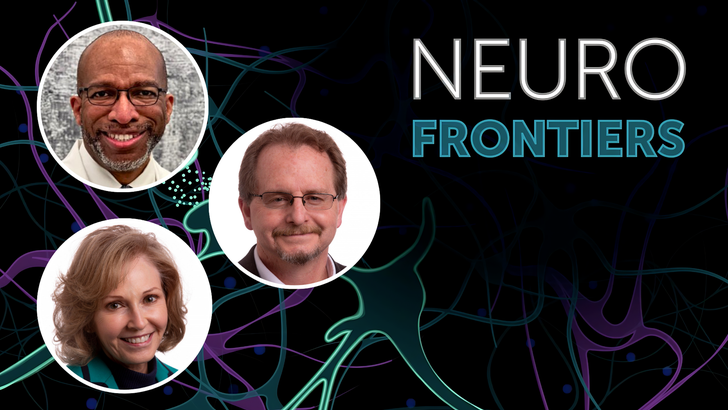
Welcome to NeuroFrontiers on ReachMD. I’m Dr. Jerome Lisk, and joining me to discuss new advances in Parkinson’s research are Drs. Michael Salvatore and Vicki Nejtek-Salvatore, professors at University of North Texas Health Science Center in Fort Worth and co-founders of the Parkinson Discovery Institute in Fort Worth, Texas. The Parkinson Discovery Institute was founded in 2024, and it focuses on building a community of researchers, patients, and caregivers and bringing connection and resources to those navigating Parkinson’s disease.
Michael, Vicki, welcome to the program.
Dr. Salvatore:
Dr. Lisk, we’re very excited to be here today on ReachMD, and many thanks for the invitation to join and talk about the Parkinson Discovery Institute and our research.
Dr. Nejtek-Salvatore:
Thank you, Dr. Lisk. We’re excited to be here to share everything that we’ve learned over the past few years.
Dr. Lisk:
So, Michael, could you explain what inspired you to create the Parkinson Discovery Institute and what makes your mission unique in the Parkinson’s space?
Dr. Salvatore:
I’d like to start by saying that I began preclinical Parkinson’s research about 20 years ago, being very interested in understanding how the brain is contributing to the motor impairment of Parkinson’s. Our work shed some light on a largely neglected area of the brain that is affected by Parkinson’s, showing how the neurotransmitter dopamine plays a much larger role in this area than previously believed.
And then, in order for us to really start moving forward to the patient with our work, we wanted to understand how exercise was working, and we used treadmill regimens in our rat model. But even with that, it became increasingly apparent to me that we needed to find routes of being able to translate our work into the human realm of the disease.
And so 10 years ago, I relocated my lab from LSU Shreveport to UNT Health in Fort Worth, and soon I met Dr. Nejtek, who had a wealth of experience studying vulnerabilities to cognitive function in human subjects. And so we really wanted to roll up our sleeves and work to determine the building blocks of how we can translate our rodent work into Parkinson’s patients. And so to really get going, we wanted to connect with the people most affected by this disease, and that’s what inspired us to co-found the Parkinson Discovery Institute. And this is a good time for Dr. Nejtek to describe this institute and why it’s so necessary.
Dr. Nejtek-Salvatore:
Yeah, our awareness of neurodegenerative diseases in the Tarrant County area is really shocking when you start to realize that a little over 2.1 million people call Tarrant County their home. And actually, the incidence of Parkinson’s disease in our county alone is the highest in Texas, with about anywhere from 350 to 400 people per 100,000 being at risk for this disease.
One of the things we wanted was to reach out and try to develop a center and institute where we could share knowledge and education about the prodromal effects of this disease so that it can be treated as early as possible. One of those ways was to develop this Parkinson Discovery Institute, where we try to engage the neurologist, the people with Parkinson’s disease, the caregivers, the family members, and anybody and everybody associated with that patient.
Dr. Lisk:
So you guys bring up great points about translational research, getting patients with Parkinson’s disease in early with treatment, and looking at alternative treatments, such as exercise. And Vicki, your team has been on the forefront of studying how exercise influences Parkinson’s biology. What was your goal here?
Dr. Nejtek-Salvatore:
So my clinical research goal is to understand exactly what’s going on in the brain, and we’re one of the first, if not the only, researchers doing cross-species translational work so that we can establish what’s happening in the patient based on what’s happening in the rat. We don’t have to do invasive procedures or expensive imaging techniques on our patients, and the best way to see that is through the brain of the rat.
We’ve noticed that, with a lot of the research out there, the age for the rat or the mice is not really equivocal to what we’re seeing in the patients. So they may say they’re aged, but they’re only equivalent to maybe 40 or 50 years old in human years. We, on the other hand, Michael especially, are very in tune to making sure that the age of the rat meets that requirement of 65 years old and older, and that would actually mimic and mirror the response that you would get from a Parkinson’s disease patient.
So I’ll let Michael answer the rest of that on the rat studies.
Dr. Salvatore:
Vicki brings up the critical point, and that is, what are the reproducible and quantifiable elements of translation of work that we see the outcomes of research in the rats versus what we’re seeing in humans?
So to kick this off, three years ago, Vicki started a study using patients at a well-established exercise program here in Fort Worth, Punching Out Parkinson’s. This program was specifically designed for Parkinson’s patients, and she found some pretty significant discoveries that helped get us going in this regard.
So first, those who were in the program for at least three months had better scores, executive function, and motor performance. And importantly, we captured the heart rate differences of these patients before and right after that exercise regimen, and we took that information as a guiding metric back into my lab to do the preclinical work, simply asking the question, “How fast do we need to get the rats going on the treadmill to get the same heart rate increase that we saw in the patients?” And so we did that. We got that study published.
But even more exciting research followed after that. We just got that published in Experimental Neurology last year with our collaborator, Jason Richardson at the University of Georgia—we found in our Parkinson’s model rats that exercised that the two established blood-based biomarkers that have already been established in Parkinson’s patients as a sign of disease severity were actually reduced in the blood of these rats.
Now, these same two biomarkers can be detected, as I mentioned, in the blood in humans, and so we now have the exercise regimen being the same intensity between rats and humans, and now we’ve got blood-based biomarkers that we see in rats. We show that exercise reduced them, and we can also detect these biomarkers in Parkinson’s patients, so we’ve already established now two fundamental elements of translation.
Dr. Lisk:
And what were the names of those two biomarkers you mentioned?
Dr. Salvatore:
The first one is glial fibrillary acidic protein, also known as GFAP, and then the other one is neurofilament light, abbreviated NfL.
Dr. Lisk:
Given these findings, Vicki, how do you see exercise fitting into the broader Parkinson’s treatment landscape?
Dr. Nejtek-Salvatore:
Well, first of all, if we can catch these patients at the beginning of their disease, we’re actually able to not have to invoke the use of these high-powered medications. We can actually give them an aerobic exercise or some kind of physical activity that they can actually perform. Even if they are having trouble walking, we can still do chair exercises—just anything we can do to keep the heart rate up and to try to reverse what Parkinson’s has taken away from our patients and try to even get them to have some recovery in their executive function and recovery in their motor symptoms.
Dr. Lisk:
That’s very exciting. So what I’m taking from that is that we could probably even delay the onset of taking medications and actually improve the disease process and quality of life as well.
Dr. Nejtek-Salvatore:
Absolutely. That’s an important factor because some of these folks might be in a prodromal type of stage, and you wouldn’t want to medicate them until you absolutely have to because, as you already know, Dr. Lisk, these medications carry some adverse side effects.
Dr. Lisk:
Yeah. And I think that’s going to be very important when we start talking about biomarkers for the pre-motor phase when patients are not symptomatic, because then we maybe will have a greater impact before symptoms even start.
For those of you just tuning in, you’re listening to NeuroFrontiers on ReachMD. And I’m Dr. Jerome Lisk, and I’m speaking with Parkinson Discovery Institute co-founders, Drs. Michael Salvatore and Vicki Nejtek-Salvatore, about current and emerging avenues in Parkinson’s research.
Now, I’m excited to ask you this question. Michael, could you tell us about any other avenues your research team is exploring?
Dr. Salvatore:
So we’re about to use aged rats. Surprisingly, even though you know, as well as many in our audience, that aging is the number one risk factor for Parkinson’s, very few studies actually use aged rats to provide that necessary neurobiological background in a Parkinson’s model. So we have that now, and I think whatever we find in terms of changes in the brain and vis-a-vis the blood-based biomarkers, we are going to have now the third element of translation to the Parkinson’s patients by not only keeping exercise intensity the same and looking at the same blood-based biomarkers that Dr. Nejtek will be looking at in a prospective study and comparing what they had six or seven years ago—we will now have that final translational element of aging.
And so we’ll look in the areas of the brain that are affected in Parkinson’s and see what is changing in the dopamine neurochemistry, heat shock proteins, and other proteins that are really housekeeping. We found some very exciting leads on another protein biomarker that I didn’t mention yet called UCHL1, which is a housekeeping protein that manages getting rid of proteins that are degraded. And so we’re really excited about following up on these leads.
Dr. Lisk:
Vicki, from your vantage point, what are the biggest unanswered questions in Parkinson’s research? And how is your team working to address them?
Dr. Nejtek-Salvatore:
We want to encourage all the neurologists, the movement disorder specialists, and the primary care physicians to learn more about what we’re trying to accomplish and learn more about the advantages of getting people diagnosed early in their disease in the prodromal areas. But we want to know that they’re understanding the story behind the caregiver as well. The caregiver has to be involved to a very high level. That caregiver is going to give you information about that patient that you can’t get from anyone else.
In terms of education and in terms of what we want to do in terms of prevention, there are all kinds of problems out there with mild traumatic brain injury, but we don’t understand the treatment response as well as we should based on the individuals. How did they acquire Parkinson’s disease? How did they get to where they are today? You need to know if they’re even medication compliant. You give them a medication—are they taking it, or are they not taking it the way you’ve prescribed? Are they able to exercise at all? And you need to be aware of what they are actually accomplishing when they’re not right in front of you. Is there anything that’s going to tell you as a clinician how you should approach that patient and how you should approach that caregiver so that you can get the best treatment response possible?
Dr. Lisk:
So, as we wrap up, how can clinicians who are listening get involved with your Parkinson Discovery Institute to support the mission?
Dr. Nejtek-Salvatore:
Our listeners can reach us at ParkinsonDiscoveryInstitute.org, where they can find different tabs for caregivers, education, and awareness, and our Parkinson Discovery Institute email is there as well.
Send us an email. We will answer anything. We are so devoted to the Parkinson’s disease patients and their caregivers. We know firsthand how this can affect families, how devastating it can be, and especially when, like Michael said, there’s a lot of information out there on the internet that’s not exactly accurate or is not exactly as accurate as it could be. It causes people a lot of undue stress because they don’t know what’s real and what’s not real.
When you come to the Parkinson Discovery Institute website, you’re going to have the best vetted information out there—not just our research, but other people who are doing very good research out there in the real research world, plus, the expertise of you, Dr. Lisk, Dr. Alfonso, and our caregivers and our patients. They know firsthand.
We also know firsthand. My grandfather died of Parkinson’s disease, and Michael’s mother died of Parkinson’s disease, so we know firsthand what it’s like to go through a beloved family member having Parkinson’s, and it’s very frustrating for the caregiver. We understand that, and we want to support them.
And in terms of the healthcare providers, we are willing to go to extra lengths to talk to them, give them information that they’re asking for, collaborate with them, and integrate with them in any possible way.
Dr. Salvatore:
I want to also add that our plan is to host quarterly seminars from movement disorder specialists, psychiatrists, physical therapists, and basic science researchers such as myself, and we will get that word out on our website and plan accordingly. We are looking to have our first such event this April, which is, of course, Parkinson’s Awareness Month.
Dr. Lisk:
Well, that’s a great segue to wrap up our discussion. And I want to thank my guests, Dr. Michael Salvatore and Vicki Nejtek-Salvatore, for joining me to discuss the Parkinson Discovery Institute’s latest work in research in Parkinson’s disease. Michael, Vicki, it was great having you on the program.
Dr. Salvatore:
Likewise. We really appreciate this opportunity.
Dr. Nejtek-Salvatore:
Thank you so much.
Dr. Lisk:
For ReachMD, I’m Dr. Jerome Lisk. To access this and other episodes in our series, visit NeuroFrontiers on ReachMD.com, where you can Be Part of the Knowledge. Thanks for listening.
